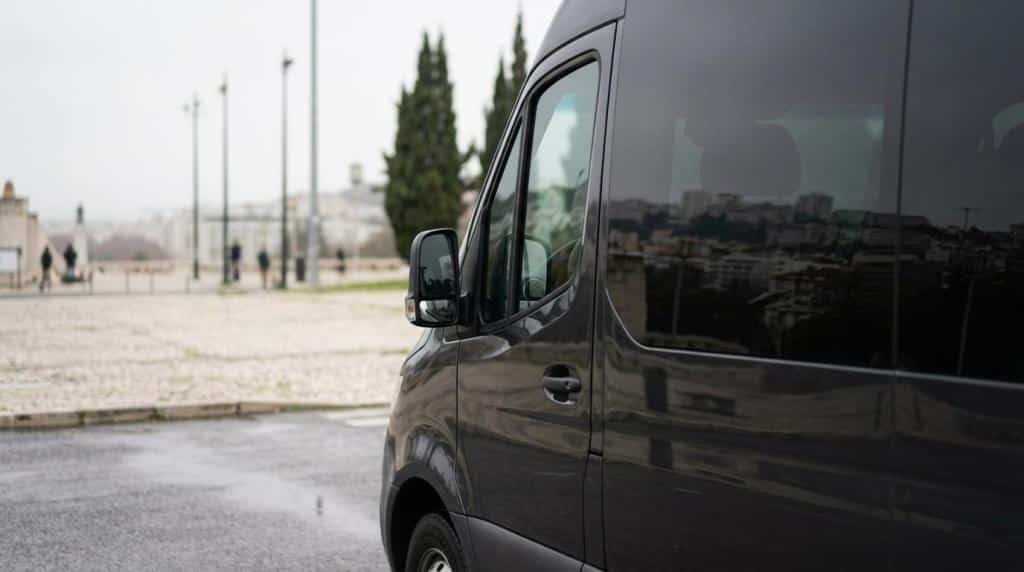
Group transfers in Portugal keep airport arrivals, hotel moves and event logistics under control when several people need to travel together. They solve a very practical problem: how to move a group from Lisbon, Porto or Faro without splitting into taxis, waiting for public transport or risking missed timings. For holiday groups, schools, corporate teams and travel agencies, the value is not just transport. It is coordination, luggage capacity, predictable timing and a simpler start to the trip.
What are group transfers in Portugal and when do they make sense?
Group transfers are private or shared transport services that move several passengers together between airports, hotels, venues or cities in Portugal, including Lisbon Airport and Faro Airport.
They make most sense when the group needs one coordinated pickup, one driver contact and enough room for luggage. In practice, that often starts at 6 passengers, but the tipping point can come earlier if the route is long, the arrival time is late or the group includes children, older travellers or bulky bags.
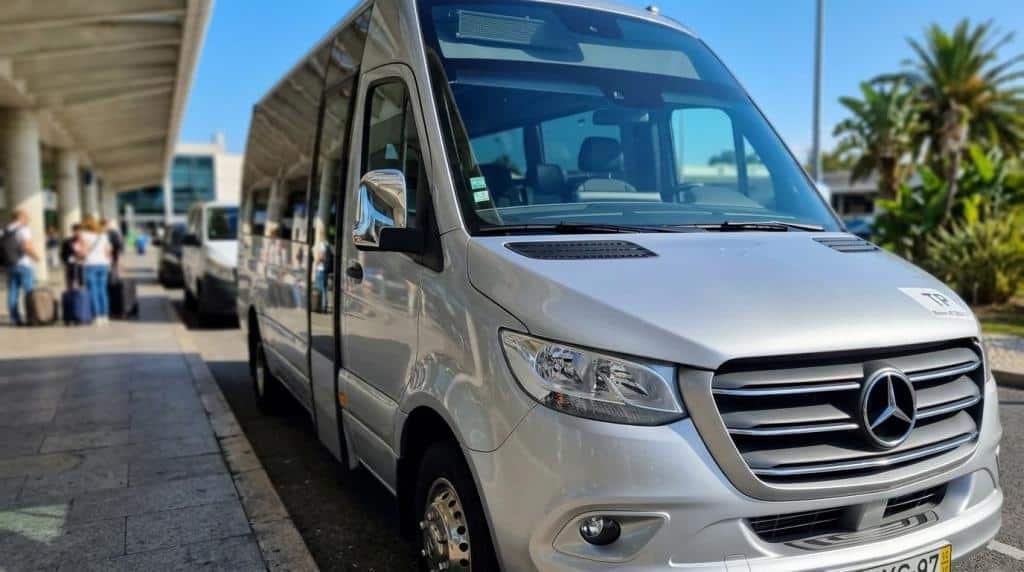
A group transfer can be a minivan, minibus or full coach with driver. The service may be as simple as Lisbon Airport to Baixa, or as structured as Faro Airport to several Algarve resorts with timed hotel drops. For agencies and event planners, one invoice and one operating contact can be as valuable as the vehicle itself.
How do private airport transfers compare with shared shuttles in Portugal?
Private transfers win on speed and control, while shared shuttles win on headline price. At LIS and OPO, that trade-off is usually the first decision to make.
Private services typically include meet and greet, flight monitoring and door-to-door drop-off. Shared shuttles are cheaper per person, but they work to fixed routes, fixed departure patterns or loading thresholds. At Porto Airport, shared shuttle waits of 45 to 60 minutes are not unusual before departure.
The key trade-off is total trip friction. A €4 airport bus in Lisbon or a €5.64 shared shuttle from Porto can look excellent on paper. Yet if eight people each need separate tickets, drag luggage to a stop and then walk again from a city-centre drop point, the saving narrows quickly.
A common mistake is comparing only the first quoted fare. If your group has 8 to 12 passengers, the relevant figure is usually cost per person for the whole party, not the cheapest advertised seat.
How do coaches and minibuses compare for larger groups in Portugal?
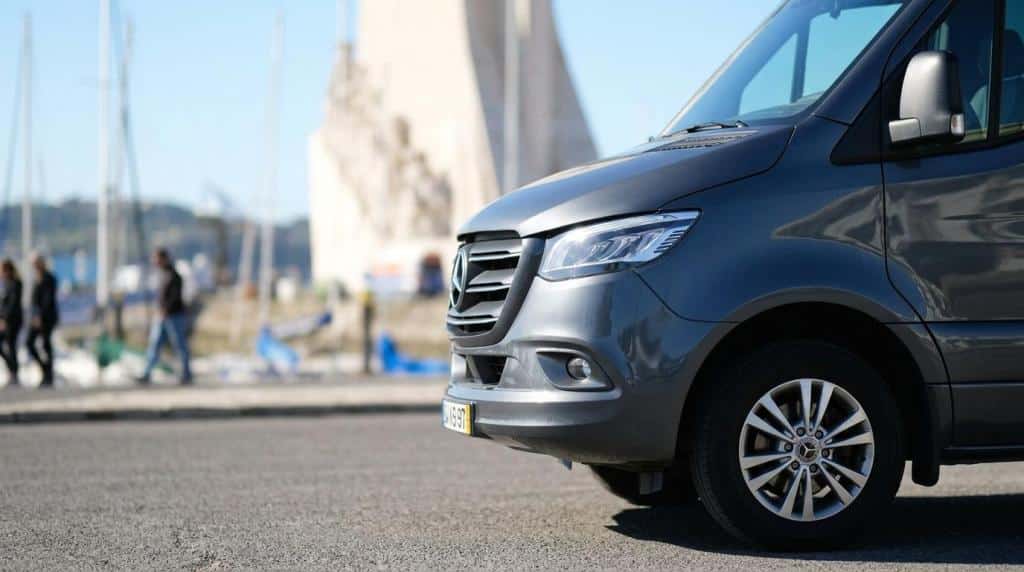
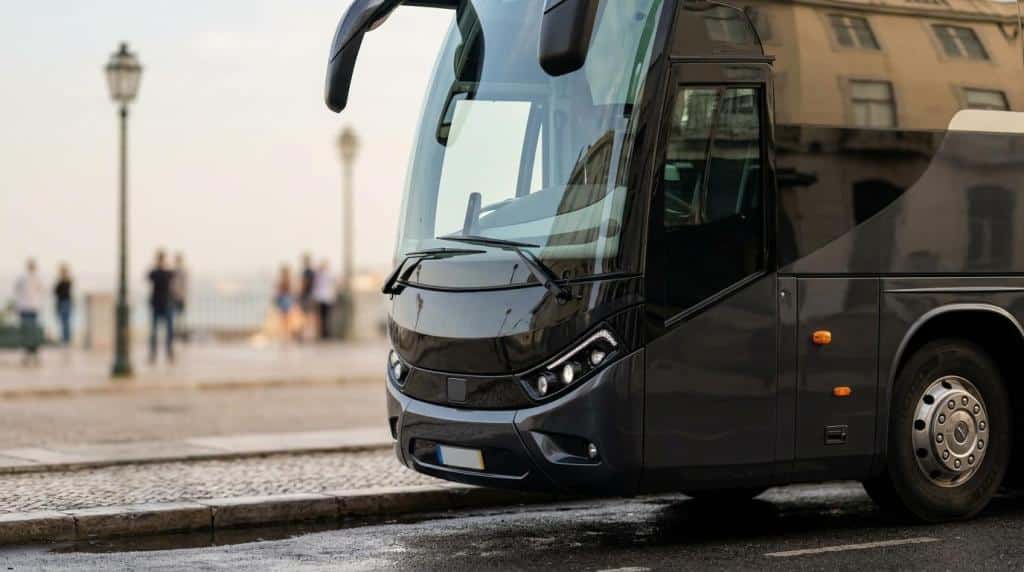
Minibuses suit 8 to 19 passengers and tighter urban access, while coaches suit 25 to 53 passengers and lower cost per head. A Mercedes Sprinter and a 53-seat coach solve different problems.
Minibuses are easier for central Lisbon streets, hotel entrances and shorter airport transfers. They also reduce empty seats if the group is in the 10 to 16 range. Coaches come into their own when luggage volume is high, the group is above 20, or the trip includes longer motorway segments across Portugal.
The trade-off is flexibility versus scale. A coach usually gives better value per traveller for larger groups and often better luggage hold capacity. A minibus is simpler if the route includes narrow streets, a single hotel drop or a fast turnaround after landing.
One useful rule is this: if the passenger count suggests a minibus but the luggage count suggests a coach, trust the luggage count.
What group transfer companies are the strongest options for Portugal airports?
Yes, there are strong options at Lisbon, Porto and Faro, but the right choice depends on group size, route complexity and whether you need a private charter or a shared seat.
For airport groups, the market splits into private bus and minibus operators, platform-based transfer sellers and shared shuttle providers. A practical shortlist looks like this:
-
Aerocoope
Lisbon-based and focused on group transport, Aerocoope is a direct fit for private airport transfers, tours and onward travel across Portugal and into Spain. Its fleet covers 8 to 53 seats, which is useful when a group needs more than a standard van and wants one tailored programme. -
Welcome Pickups
Strong for Lisbon and Porto private airport transfers, with meet and greet, flight monitoring and high published review scores. It is usually most relevant for smaller groups that fit into 8 to 12-seat vehicles. -
KiwiTaxi
A broad aggregator with Portugal coverage and vehicles from standard cars up to 19-seat minibuses. It is useful when travellers want upfront pricing and online comparison across different capacities. -
Faro Airport Transfers and Algarve Family Transfers
Good Faro-focused examples for Algarve arrivals, especially where child seats, tourist-area routing and local airport familiarity matter. Publicly visible licensing and family-friendly extras are part of their appeal. -
AeroBus, 100Rumos and Faro Shuttle Bus
Shared and public options for budget-sensitive groups. They work best when the schedule is flexible and door-to-door service is not essential.
How should you book a group transfer from Lisbon Airport step by step?
Book Lisbon Airport group transfers by matching vehicle size to luggage, setting a realistic pickup time and confirming the exact city-centre drop. LIS is close to central Lisbon, but traffic and hotel access still matter.
Lisbon looks simple because the airport is only around 7 to 8 km from the centre, often about 25 minutes by road. The trap is assuming every city-centre drop is easy. Baixa, Alfama and some event venues can involve coach restrictions, tight kerbs or walking from a legal stop.
-
Count people and bags properly
Include checked luggage, cabin bags, prams and equipment. A 12-seat vehicle may not fit 12 passengers with 12 large cases comfortably. -
Set the pickup around 30 to 40 minutes after landing
Give the flight number and a live mobile contact. This gives time for passport control and baggage reclaim without pushing the driver into unnecessary waiting. -
Confirm the final stop in detail
Send the hotel name, street number and any access notes. A common mistake is writing only “Lisbon city centre”, which is too vague for precise scheduling and vehicle planning.
How should you arrange a Porto Airport group transfer without delays?
Porto Airport transfers work best when the waiting policy, meeting point and final destination are fixed in advance. OPO is efficient, but poor coordination still creates avoidable delays.
Porto’s airport is about 15 km from the city, with many transfers taking around 20 minutes in light traffic. The bigger issue is not distance. It is whether the group is heading to Porto itself, or onward to Braga, Guimarães or the Douro region.
- Choose the service model: If the group is going straight to a Porto hotel, private transfer is usually the fastest option. If the group is highly price-sensitive and flexible, a shared shuttle or metro may still work.
- Check the waiting policy: Private operators often include flight delay monitoring and around an hour of waiting. Shared services may wait 45 to 60 minutes to fill seats.
- Lock the meeting point: Ask for the exact arrivals-hall location and driver identification method. Kerbside pickup assumptions cause more missed contacts than traffic does.
How should you plan a Faro Airport transfer for Algarve resorts step by step?
Faro Airport transfers need destination planning first, not vehicle planning first. FAO is only about 4 km from Faro city, but Algarve resort transfers can be much longer.
A transfer to Faro city may take roughly 15 minutes. A transfer to Albufeira, Lagos or western Algarve resorts is a different booking category, with higher mileage, more luggage pressure and stronger seasonal demand. In summer, last-minute availability can tighten quickly.
-
Decide whether you need a city transfer or a resort transfer
If the hotel is in Faro itself, a cheaper shared or public option may be enough. If the destination is Vilamoura, Albufeira or Lagos, private transport usually removes several connection points. -
Confirm family and accessibility needs early
Child seats, booster seats and easy step access should be requested before payment, not on arrival. -
Book earlier for peak months
July and August are the periods where airport demand, resort traffic and hotel turnover combine. If the arrival is late night, early booking matters even more.
How much do group transfers from Lisbon, Porto and Faro airports usually cost?
Prices range from about €1.50 on Porto public transport to well over €200 for larger private minibuses. Lisbon, Porto and Faro all show the same pattern: the cheaper the seat, the less control you get.
Public and shared benchmarks are useful. Lisbon’s Aerobus is about €4 per person. Porto metro tickets from the airport are often around €1.50 to €2. Faro Shuttle Bus advertises fares such as €8 to Faro city, €12 to Albufeira and €20 to Lagos.
Private transfer pricing changes by vehicle size, route and season. Published examples show KiwiTaxi at about €234 from Porto for 15 to 19 passengers and about €260 in Lisbon for 16 to 19 passengers. Faro private options for smaller groups can start around the tens of euros for a car or small minivan, then rise sharply for larger vehicles or longer Algarve routes.
Here is the practical way to read pricing. If the group has 4 people, public transport may still win. If the group has 10 people with luggage, private transport often becomes competitive on a per-person basis while saving a large amount of time. The misconception is that private always means expensive. For groups, it often means the cost is concentrated, not inflated.
What capacity and luggage rules matter most for group airport transfers?
Passenger count is only half the booking. A 16-seat minibus and a 53-seat coach can both be “available”, but luggage volume decides which one will actually work.
Operators usually quote maximum seats, not maximum comfort with full baggage. That matters at airports because every traveller arrives with at least one bag, and many groups carry more: golf clubs in the Algarve, conference materials in Lisbon, school luggage in Porto, or surf gear on Atlantic routes.
If the group has one large suitcase and one cabin bag each, build around luggage first. If there are 12 passengers with 12 large cases, a vehicle that is technically licensed for 12 may still be poor operationally. Child seats can also reduce usable space. So can wheelchairs, folded pushchairs and musical instruments.
A common mistake is booking by headcount alone and trying to “make the bags fit on the day”. If that happens, the driver cannot legally improvise extra seat space by compromising safety.
What licensing, insurance and safety checks should you make before booking group transfers in Portugal?
Licensed, insured operators are the only safe choice. In Portugal, Turismo de Portugal references, proper commercial insurance and working seatbelts are basic checks, not premium extras.
Before confirming a booking, ask what vehicle class is being supplied, whether the operator is licensed for passenger transport and how flight delays are handled. At airport level, also check the meeting procedure. Professional services should be able to state clearly who meets the group, where, and what happens if luggage reclaim runs late.
Safety is more than legal paperwork. The vehicle should have seatbelts for every passenger, and the driver should be assigned to commercial passenger service, not casual subcontract work without clear accountability. If anyone in the group has reduced mobility, ask about boarding access in advance.
If the provider cannot confirm insurance, cancellation terms or vehicle details in writing, that is usually enough reason to keep looking.
When is a cross-border or multi-city group transfer better than a simple airport pickup?
A multi-city or cross-border transfer is better when Lisbon, Porto or Faro is only the entry point. Groups going to Seville, Fátima, the Douro or several hotels usually benefit from one planned road movement.
This is where private bus and minibus transport becomes more than an airport service. It becomes itinerary control. A group arriving at Lisbon Airport may need same-day movement to Sintra, Óbidos and a conference venue. A Faro arrival may actually need a direct run to Seville. A Porto landing may be the start of a Douro or Braga programme.
If the route includes multiple stops, border crossings or a return on a different day, stitching together separate taxis, rail tickets and local coaches often creates more risk than value. One vehicle with one operating plan usually gives better timing discipline, easier luggage handling and fewer missed connections.
For travel agencies, schools and event organisers, this is often the point where a bus or minibus charter becomes the stronger option than a standard airport transfer. It is not just about getting out of the airport. It is about keeping the whole programme moving.