Planning group transport in Portugal looks simple at first: choose a route, count the passengers, book a vehicle. In practice, the strongest plans are built around three things that have a direct effect on comfort, timing, and budget: group size, licensing, and road costs.
That matters because Portugal welcomes large numbers of visitors each year, and the transport picture changes quickly between airports, city centres, coastal resorts, business venues, schools, and rural destinations. A group moving between Lisbon, Porto, the Algarve, Fátima, Sintra, or even across the border into Spain needs more than a map. It needs a transport plan that suits the group’s shape, schedule, luggage, and legal requirements.
Start with group size and itinerary for group transport in Portugal
The first question is not “Which vehicle is cheapest?” It is “What does this group actually need?” A party of 18 guests on a direct airport transfer is very different from 18 delegates travelling with exhibition material, or 18 students moving between several stops in one day.
Passenger numbers are only the headline figure. The real planning work sits behind them: arrival patterns, luggage volume, accessibility needs, hotel access, waiting time, and whether the group stays together or splits across the day. A full coach that looks right on paper can feel cramped if everyone carries large cases. A larger vehicle can be the better choice even when seats are left empty.
It also helps to map the trip structure before requesting a quote. Is it a simple transfer, a multi-day tour, or a rolling schedule with pickups in different cities? Portugal’s road network is strong, yet urban access, historic centres, bridge crossings, and motorway tolls can all change the day’s timing.
A good planning brief usually covers:
- passenger count
- luggage estimate
- arrival and departure windows
- exact pickup and drop-off points
- daily mileage
- whether the route includes Spain
Compare minibus and coach sizes for Portugal group travel
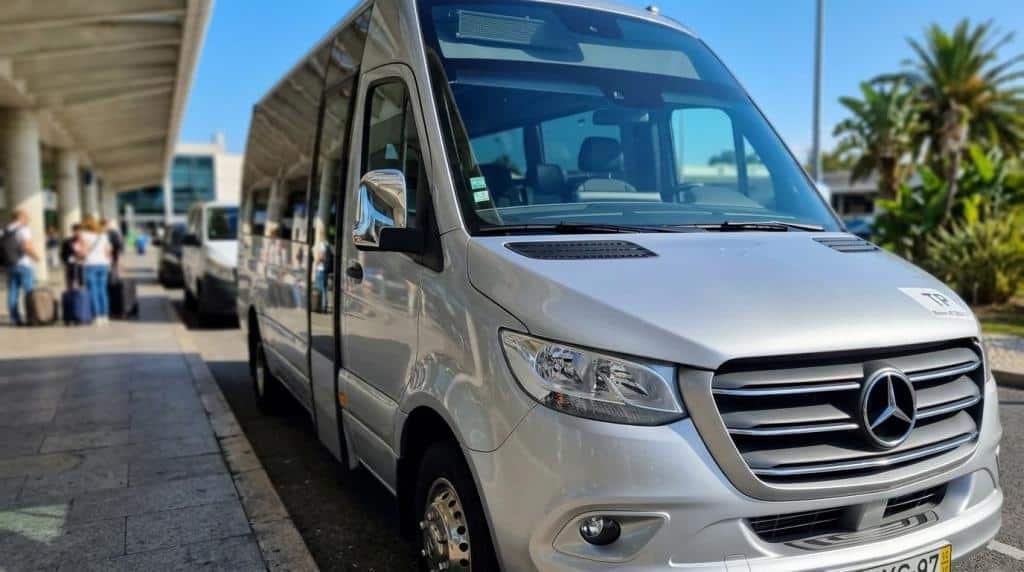
Operators in Portugal often offer a wide range of vehicles. Aerocoope, a Lisbon-based bus and minibus company, lists options from 8 to 53 seats, which is a useful reference point for how the market is commonly structured.
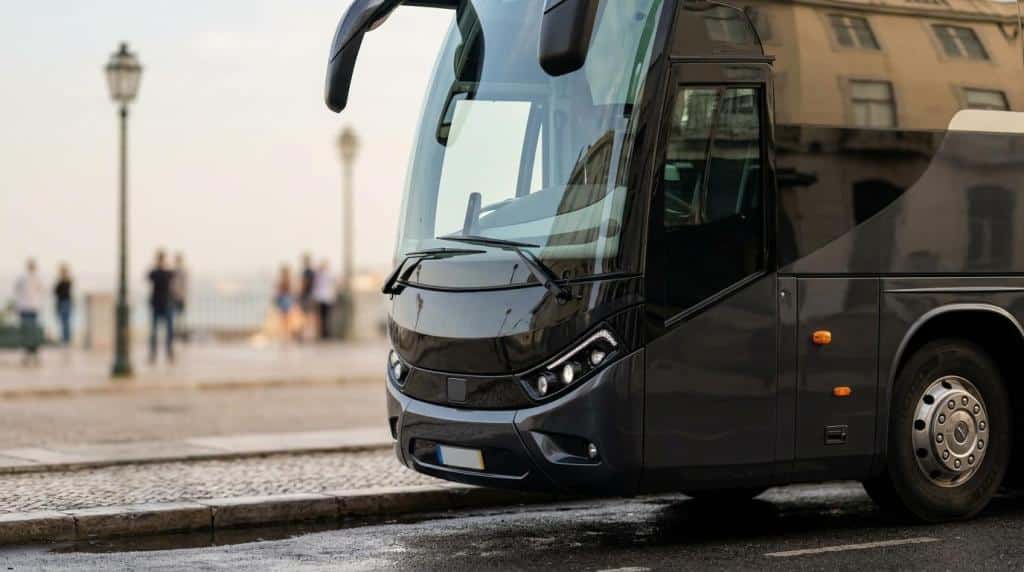
The right size depends on more than numbers. A smaller minibus may work well for city hotels and tighter access roads. A mid-size vehicle can be ideal for touring groups that want easier boarding and faster loading. A full-size coach suits larger events, school groups, congress transport, and longer-distance touring where onboard comfort becomes more important.
Here is a practical way to think about capacity:
| Group size | Typical vehicle choice | Often suitable for | Main check before booking |
|---|---|---|---|
| 6 to 8 | 8-seat minibus | Small private groups, hotel transfers, executive movements | Luggage space |
| 9 to 16 | 16-seat minibus | Family groups, agency tours, short circuits | Passenger comfort on longer legs |
| 17 to 19 | 19-seat minibus | Small touring groups, school outings | Equipment or extra baggage |
| 20 to 27 | 27-seat minicoach | Day tours, corporate shuttles, regional circuits | Access to narrow urban streets |
| 28 to 37 | 37-seat coach | Medium events, student travel, cultural visits | Boarding times at multiple stops |
| 38 to 43 | 43-seat coach | Larger organised groups | Venue parking and waiting rules |
| 44 to 53 | 53-seat coach | Conferences, cruise groups, large tours | Final access near hotels and attractions |
One smart habit is to build in a little spare capacity. That gives room for luggage, comfort on longer days, and a buffer if the passenger list changes close to departure.
Check driver, licensing and insurance for Portugal passenger transport
For organised group travel, the driver is not a minor detail. It is the operating model.
Aerocoope states that all of its passenger transport services include a driver, and that reflects how many private group transport services are arranged in Portugal. For groups, this removes the pressure of route planning, local road rules, toll handling, and city access. It also matters from a compliance point of view.
Portuguese official guidance from the IMT indicates that passenger transport licensing becomes relevant when vehicles used have more than nine seats. The IMT classifies those as heavy passenger vehicles for that licensing threshold. For a travel organiser, school, corporate coordinator, or agency, that means the legal framework matters once the vehicle moves beyond ordinary small-car territory.
Government guidance also states that motor insurance is compulsory in Portugal for all motor vehicles that require a legal licence to be driven. That should not be treated as a background issue. It is part of responsible trip planning.
When reviewing a transport proposal, focus on these points:
- Driver included: confirm whether the service is supplied with a professional driver for the full itinerary
- Vehicle category: check whether the chosen vehicle falls into the over-nine-seat category relevant to IMT licensing
- Insurance cover: ensure the operator’s vehicles meet compulsory insurance requirements in Portugal
- Operating scope: verify whether the booking covers transfers only, daily touring, or cross-border travel into Spain
This is one of the strongest reasons to use an established operator rather than trying to piece together several ad hoc vehicles.
Plan Lisbon Airport and other airport group transfers in Portugal
Airport logistics deserve their own plan, especially in Lisbon. According to Turismo de Portugal’s TravelBI data, Lisbon Airport accounted for 51% of more than 34 million passenger arrivals at Portuguese airports in 2024. That makes Lisbon the main arrival gateway for many groups, and it also means the airport environment can be busy, time-sensitive, and less forgiving when details are vague.
A strong airport transfer plan starts before the flight takes off. The operator should know the flight number, arrival terminal details, passenger count, luggage profile, destination, and the person responsible for the group. If the group is spread across several incoming flights, the pickup strategy needs to reflect that. Sometimes one larger coach waiting for everyone is efficient. At other times, staged pickups with smaller vehicles reduce waiting time.
Luggage is often the hidden issue. Twenty passengers with cabin bags are one thing. Twenty passengers with hold luggage, sports equipment, musical instruments, or conference materials are another. It is far better to mention that early than to find out on arrival that the seating is right but the storage is not.
For airport bookings, the most useful details to prepare are:
- Flight data: number, origin, landing time, and whether the group arrives together
- Meeting plan: airport pickup point, on-site contact, and language preferences
- Load profile: suitcases, oversize baggage, wheelchairs, instruments, or event materials
- Destination sequence: one hotel, several hotels, venue first, or onward travel to another city
That level of clarity saves time, and it often leads to a better vehicle match.
Budget for Portugal tolls, bridges and road classes
Route length is only part of the road cost in Portugal. Toll structure matters too.
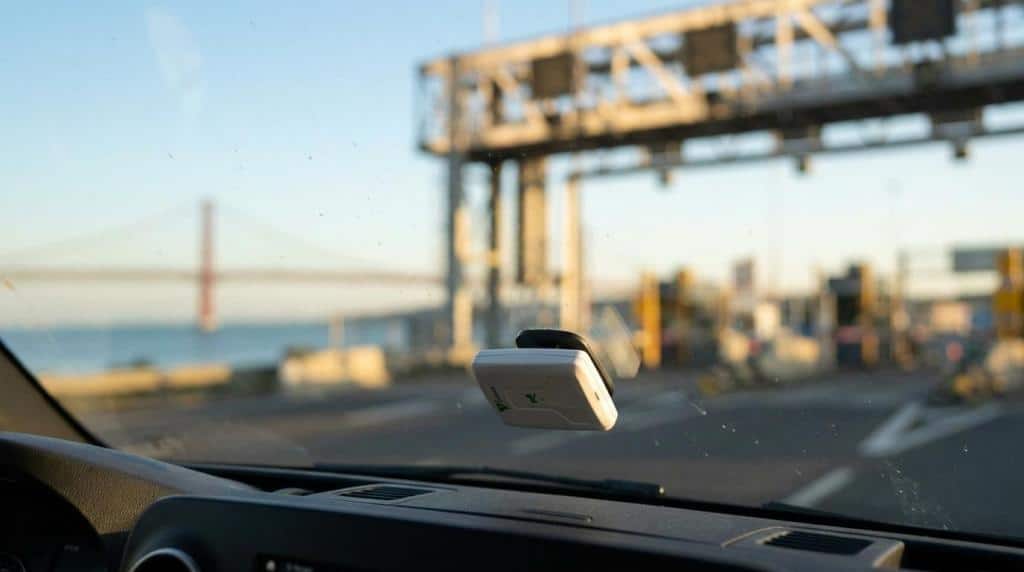
Official government guidance notes that Portugal has toll sections on some motorways and on the two bridges connecting Lisbon to the south bank of the Tagus. It also states that some roads are electronic tolls only. If a route crosses several motorway segments, or uses bridges around Lisbon, costs can move well beyond a simple fuel estimate.
Vehicle classification affects toll pricing. The same official guidance refers to Class 1 for motorcycles and vehicles up to 1.1 metres on the front axle, and Class 2 for two-axle vehicles above 1.1 metres. In practical terms, group vehicles are not all charged the same way, and coach travel should be priced with the correct class in mind.
Portugal’s electronic toll environment is another reason to work with an operator that routinely handles domestic touring. Systems such as Via Verde are part of normal road use for professional transport, but the point for the client is simpler: ask whether tolls, bridge fees, parking, and waiting time are included in the quoted price or billed separately.
When comparing offers, ask for cost treatment in plain language:
- tolls included or excluded
- bridge crossings included
- parking fees included or estimated
- waiting time policy
- driver accommodation, if it is a multi-day tour
A low headline rate can stop looking attractive once these items are added back in.
Build the route around real access, not just map distance
Portugal rewards ambitious itineraries, but realistic timing still wins.
A coach can cover Lisbon to Porto efficiently on major roads, yet the day changes once you add hotel pickups, city-centre access, a lunch stop, monument visits, and a late check-in window. The same applies to popular circuits linking Lisbon, Sintra, Cascais, Fátima, Coimbra, Porto, the Douro Valley, Alentejo, or the Algarve.
Historic centres and scenic areas often have tighter access rules, narrower streets, or designated coach parking. That does not make them difficult. It simply means the vehicle plan and the visit plan should support each other. Sometimes a larger coach handles the long-distance segment while a smaller vehicle or short walking transfer covers the final approach.
This is also where local experience pays off. A transport company that regularly runs Portugal-wide services can help shape pickup order, stop duration, and the most sensible timing around traffic peaks, venue access, and meal breaks.
Think carefully about cross-border group transport to Spain
Portugal to Spain group travel is straightforward when it is arranged properly, but it should never be treated as a casual add-on.
If your itinerary includes Seville, Badajoz, Salamanca, Santiago de Compostela, or any other Spanish destination, confirm that the operator covers cross-border work within the booking. The route may be direct, yet the paperwork, scheduling, toll treatment, and driver planning should all be clear before departure.
This matters even more for multi-day tours, incentive travel, student groups, and agency programmes where timing windows are fixed.
Prepare a booking brief that gets faster, better quotes
The fastest way to improve group transport planning in Portugal is to send a clean, structured request. Good operators can work much more efficiently when the essentials are clear from the start.
Include dates, exact times, passenger count, luggage, route, overnight stops, and whether a driver remains with the group throughout. If the trip starts at Lisbon Airport, say so plainly. If the route includes toll roads, event venues, or Spain, mention that too. If your schedule is flexible, note where timing can move. That gives room for smarter planning and sometimes a better price.
For organisers managing travel agencies, schools, cruise guests, corporate teams, or leisure groups, that clarity tends to produce the strongest outcome: the right vehicle, the right legal setup, and fewer surprises on the road. In Portugal, that is what turns a transport booking into a transport plan.